July 20, 2026
The Price of a Wish: Analyzing Obsession (The "White Get Out")
The terrifying subgenre of stolen free will is on the rise.
I recently saw a tweet pointing out how Curry Barker’s Obsession is now the highest-grossing original live-action film of the 2020s and one of the most profitable films in history. It is insane how a low-budget psychological horror film has absolutely bypassed traditional Hollywood and has become a massive cultural phenomenon. The filmmaker Curry Barker, who, until recently, was best known for his internet sketch comedy, is now one of the youngest directors in history to top the domestic box office. Almost immediately, film critics and horror fans on social media started labeling it “the white Get Out.”
On the surface, the two films look entirely different. Jordan Peele’s 2017 masterpiece is a brilliant, multi-layered satirical takedown of systemic racism in America. Barker’s 2026 breakout is a tightly wound, surreal morality tale about unrequited desire and toxic male fantasy. Yet, beneath their stylistic differences, both films are deeply bound by a shared creative DNA.
To understand why Obsession is drawing inevitable comparisons to Get Out, I decided to do some research. As it turns out, the invisible thread connecting these two modern blockbusters stretches all the way back to a 1902 gothic short story about a cursed Monkey’s Paw, a Simpsons: Treehouse of Horror episode, the founding of Jordan Peele’s own production company, and the terrifying, historical roots of the traditional Haitian zombie.
The Monkey’s Paw and Cursed Wishes
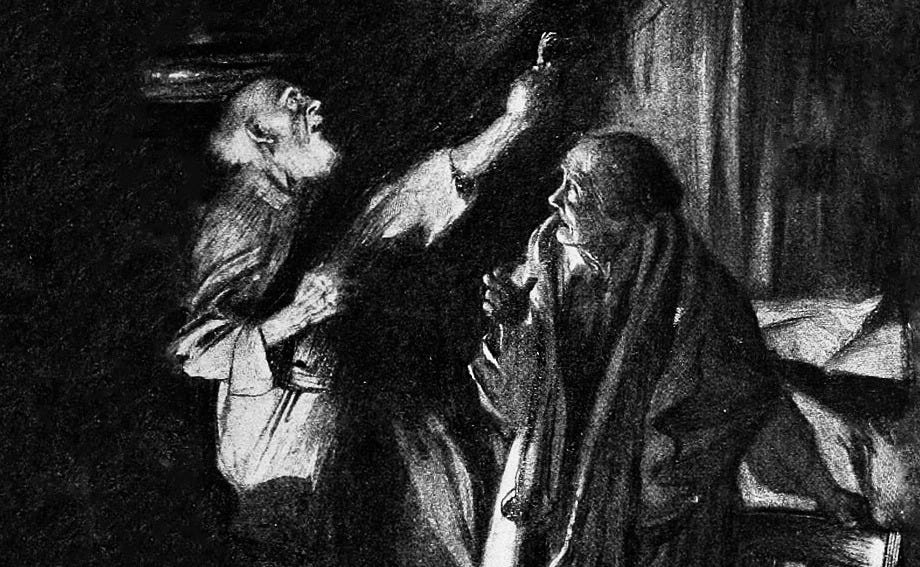
To find the spark that created Obsession, you have to look somewhere completely unexpected: a 1991 animated television comedy. Director Curry Barker has openly shared that the concept for the film was born while he was watching “Treehouse of Horror II,” the classic Simpsons Halloween special where Bart buys a magical, mummified monkey’s paw that grants wishes with disastrous and unintended consequences.
That parody, of course, traces directly back to W.W. Jacobs’ seminal 1902 short story, The Monkey’s Paw. Jacobs’ tale established one of horror’s most enduring archetypes: the cosmic punishment for selfishly manipulating reality. The rule of the monkey’s paw is brutal. You get exactly what you wish for, but the universe grants it through a horrific tragedy that makes you regret the ask.
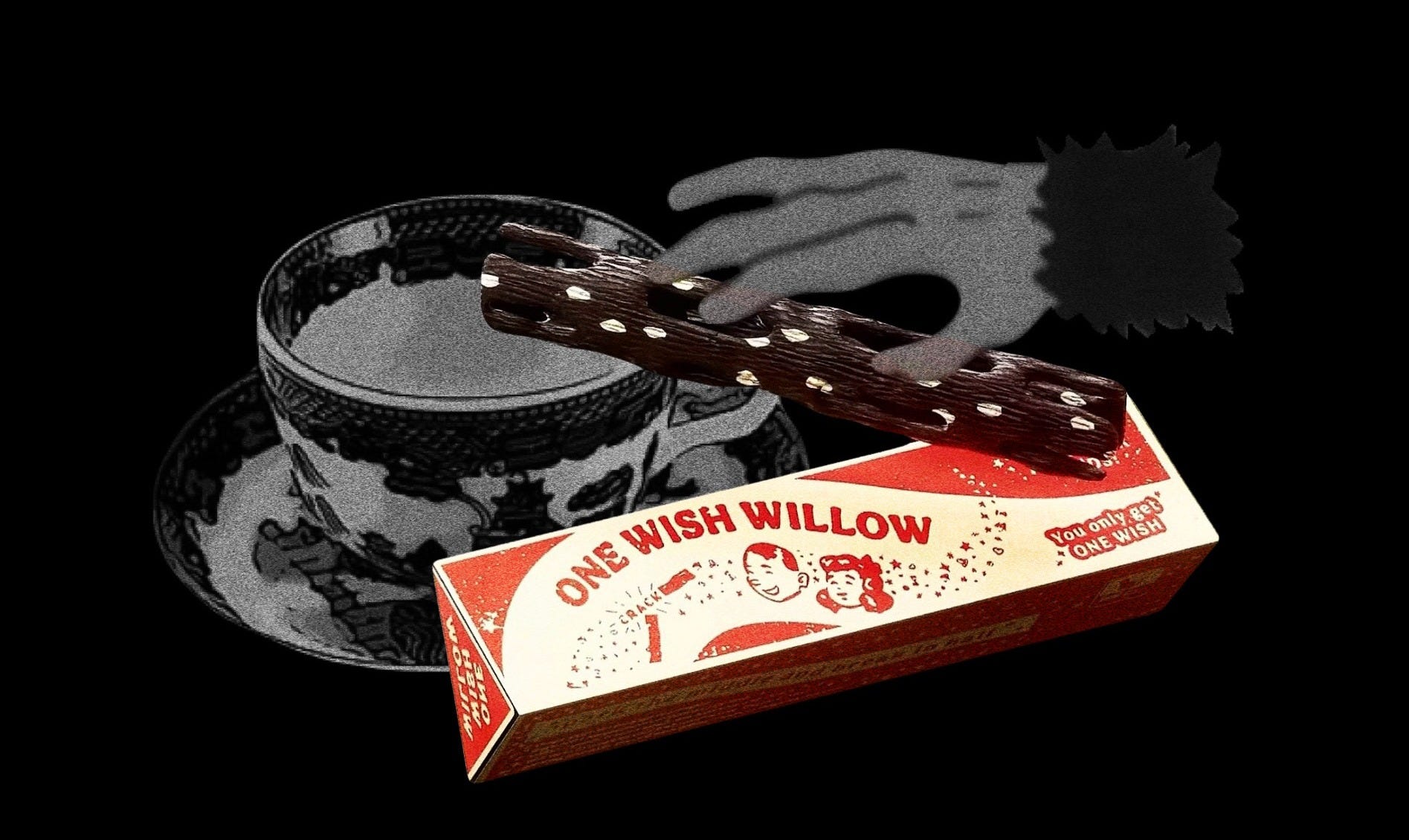
Barker took this exact “be careful what you wish for” structure and modernized it. In Obsession, the physical monkey’s paw is replaced by a mystical artifact called the One Wish Willow. When the main character, Bear, uses it to force his unrequited crush, Nikki, to love him, he is playing out a century-old literary tradition. He gets exactly what he demanded, her absolute, unwavering devotion, but it manifests as a violent, autonomous, and deeply unsettling entity.
Fascinatingly, Barker isn’t the only modern horror auteur obsessed with this specific literary curse. In 2012, long before he changed the genre with Get Out, Jordan Peele founded his own production house named Monkeypaw Productions.
Peele has explained that the name reflects his profound love for “horror magic.” To Peele, the monkey’s paw represents a perfect thematic duality: a token of ultimate luck that is simultaneously a weapon of ultimate doom. It represents the thin, terrifying line where a dream collapses into a nightmare (a theme that recurs in all of his films).
White Zombie and Haitian Vodou Folklore
I feel like it’s obvious to everyone that Obsession is borrowing from Get Out, especially with the amount of online discourse and analysis going around. In my latest article, I broke down how Get Out is the ultimate modern zombie movie. I argued that Jordan Peele successfully stripped away decades of mindless, flesh-eating Hollywood tropes to return the genre to its Haitian Vodou psychological roots and the erasure of a person’s identity.
It is this (now) subversion of the genre that allows Obsession to feel so fresh yet deeply familiar. Both Peele and Barker bypassed the modern definition of a zombie to reintroduce the historical roots of traditional Haitian folklore.
In modern culture, “zombies” are almost exclusively viewed as flesh-eating, decayed ghouls (which were popularized by George A. Romero with his 1968 film Night of the Living Dead). But in traditional Haitian Vodou folklore, a zombie is a victim to be pitied. Historically, the horror stemmed from a bokor (a voodoo sorcerer) using potions and rituals to strip a living person of their mind, soul, and free will. The victim’s body remained alive, but their consciousness was entirely erased, transforming them into an indentured servant forced into absolute, unquestioning compliance.
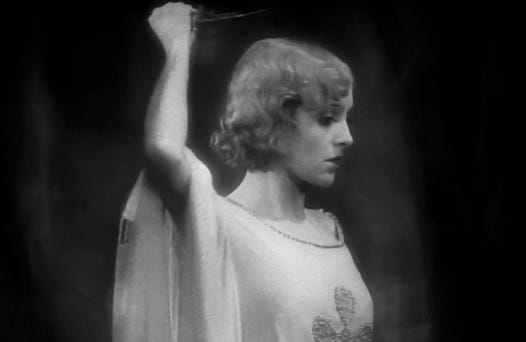
The very first feature-length zombie movie ever made, Victor Halperin’s 1932 film White Zombie, is based on these beliefs. Set directly in Haiti, the film follows Madeline Short, a young woman who travels to the island to marry her fiancé. However, a wealthy, entitled plantation owner named Charles Beaumont becomes utterly obsessed with her. Unable to win Madeline’s heart naturally, Charles strikes a desperate bargain with a villainous voodoo master named Murder Legendre (played iconically by Bela Lugosi).
Legendre gives Charles a secret potion that transforms Madeline into a “white zombie.” He fakes her death, digs up her corpse, and keeps her trapped in a sprawling castle. For the rest of the film, Madeline is a hollow shell. She is alive, but possesses no free will of her own, and her soul has been entirely evicted to satisfy a man’s selfish obsession.
Nearly a century later, Obsession’s Nikki is forced to suffer the same horrifying fate.
When you strip away the modern aesthetic of Curry Barker’s film, Nikki’s narrative arc perfectly mirrors Madeline’s. Just like Charles Beaumont in 1932, Obsession’s antagonist, Bear, is driven by a toxic sense of romantic entitlement. Just like Charles, Bear realizes he cannot force Nikki to love him naturally, so he turns to a supernatural shortcut (the fictional One Wish Willow) which acts as the modern equivalent of Murder Legendre’s voodoo potion.
The resulting horror is identical, and it’s exactly what ties Obsession to Get Out.
In Get Out, Peele made a modern Haitian zombie narrative by showing wealthy white elites acting as bokors, utilizing hypnosis and surgery to hijack Black bodies. Their mission isn’t to simply destroy their victims but to use their physical forms for their own selfish desires and make them watch by trapping the victim’s true consciousness in “The Sunken Place.”
In Obsession, Barker mirrors this exact terrifying dynamic. By invoking the magic of the willow, Bear traps Nikki’s real soul within so that an artificial, hyper-fixated entity can occupy her body. While the entity piloting Nikki’s body eventually turns violent (which separates her from Madeline’s purely passive compliance), the core tragedy remains unchanged. Both White Zombie’s Madeline and Obsession’s Nikki are terrifying updates of traditional folklore. These young women’s bodily autonomy is stolen to fulfill a man’s desperate fantasy of control.
The Label “The White Get Out”
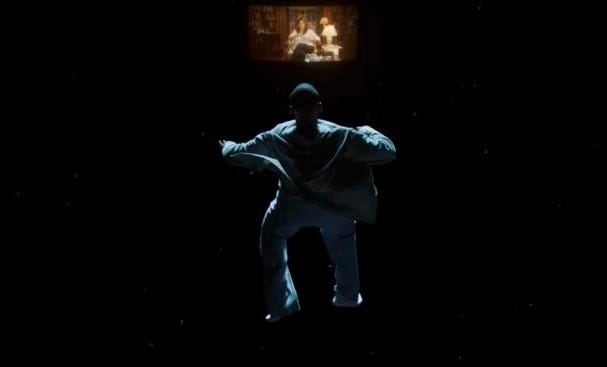
Understanding this shared thematic framework explains why audiences immediately labeled Obsession “the white Get Out.” Both films capture the specific and claustrophobic dread of losing control.
Although they both represent an identical industry phenomenon of low-budget box office triumphs, prominent film critics have pointed out where the comparison ends. Writers on here like Brooke Obie from Black Girl Watching have noted that labeling Obsession “the white Get Out” highlights what Barker’s film lacks in social depth.
Get Out used the stolen-body motif to deliver a biting, multi-layered critique of institutional racism, cultural appropriation, and white supremacy. Obsession, by contrast, operates on a much narrower, individual scale. It is a straightforward (and highly effective) cautionary tale about male entitlement, the death of romantic consent, and the bystander effect.
However, beyond the political critique, there is a much deeper connection rooted in folkloric horror: the “monkey’s paw” trap and the stolen autonomy of the Haitian Vodou zombi myth. Ultimately, the “white Get Out“ label makes sense because, despite using different methods and scopes, both films tap into the same intimate terror of a body trapped under someone else’s hostile will (even though it is on a drastically different scale).
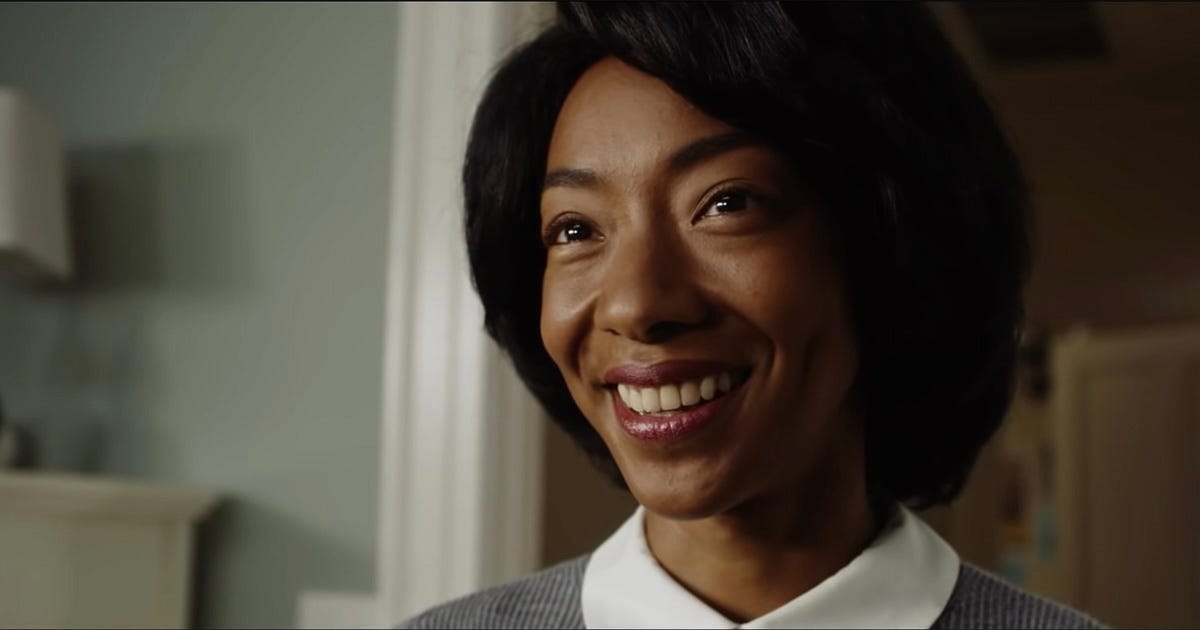
The viral discourse surrounding Obsession proves that the core theme connecting these works is universal. It doesn’t matter if it’s a mummified paw from a 1902 British short story, a cursed teacup from a 2017 satirical masterpiece, or a mystical willow tree from a 2026 indie movie; the underlying horror remains unchanged.
The most striking connection (which has now been referenced a few times and even acknowledged on TikTok accounts like Universal [@UniversalHorror]) happens when the hijacked consciousness slips its mask during an identical "no, no, no" vocal glitch. In Get Out, the maid Georgina flashes that infamous frozen smile while tears stream down her face, showing the real her underneath is trying to scream past the white consciousness that is piloting her body. In Obsession, Nikki suffers a matching psychological breakdown during the restaurant scene, with her voice escalating into a distorted chant as her real soul fights for control. Neither scene relies on blood or gore; instead, the horror comes from raw, chilling performances that expose a conscious passenger who’s trapped against their will.
It is this visceral fear of losing autonomy that especially resonates so deeply with people of color and women because, for us, bodily captivity is not a fictional trope but a historical and lived reality. That is the true terror that anchors Obsession and Get Out, the haunting nightmare of losing your autonomy to a world that views your consent as optional.